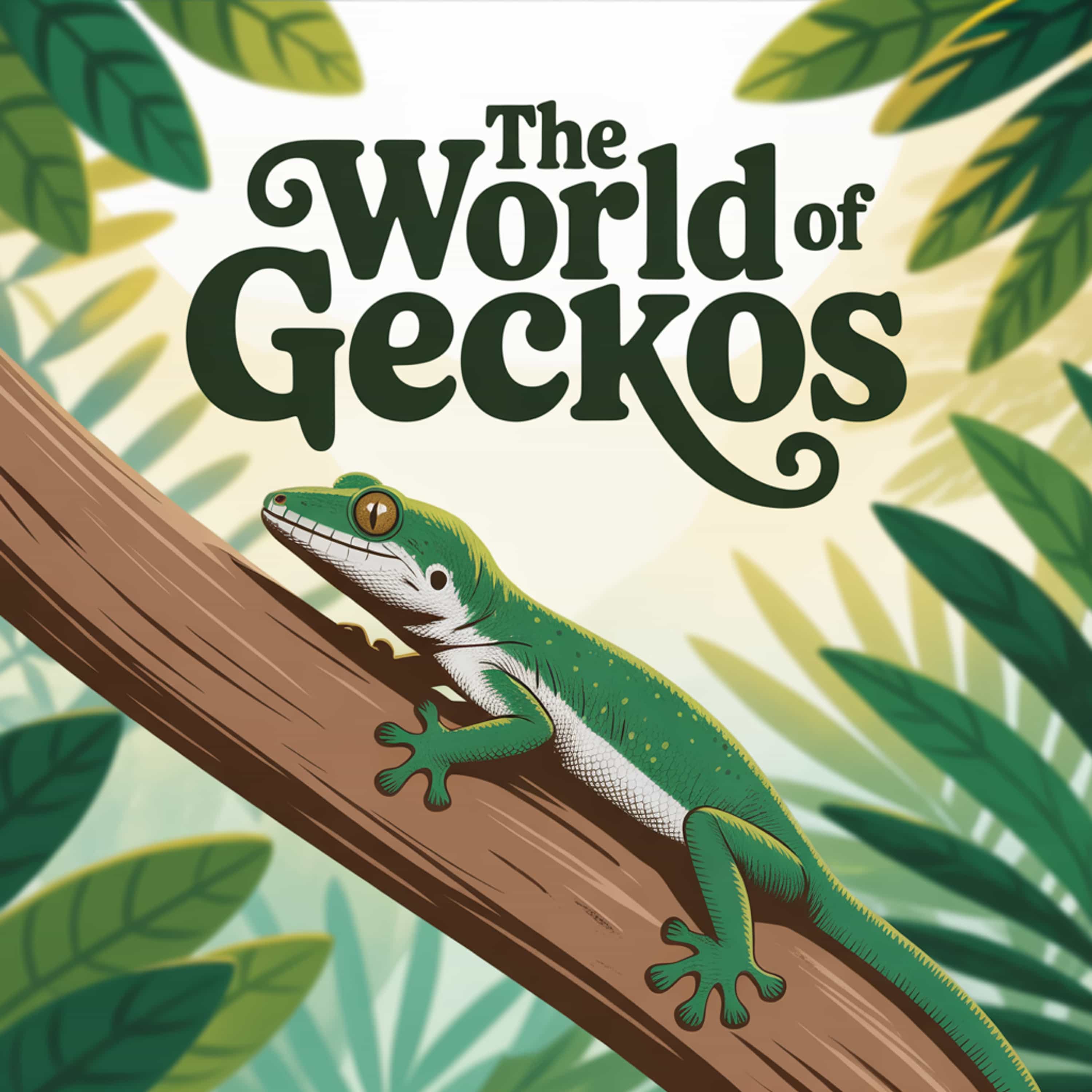
From Extinct to Iconic
Discover the astonishing journey of the crested gecko, from its presumed extinction to its rise as a beloved pet. Explore its rediscovery, unique biology, and the conservation challenges it faces today.
Chapter 1
Lost and Found in New Caledonia
19f406e5
Hey everyone, welcome back to The World of Geckos. I'm James Walker, and as always, I'm joined by the wonderful Charlotte Davies. Today, we're diving into one of the wildest comeback stories in the reptile world—the crested gecko.
Charlotte Davies
Hello, James! And hello to all our listeners. I have to say, the crested gecko’s story is one of my absolute favorites. It all starts way back in 1866, doesn’t it? Alphonse Guichenot, a French zoologist, was the first to document this rather charming little lizard. He was fascinated by those crests—those sort of fringed ridges that run from the gecko’s head all the way down its tail. They’re quite striking, aren’t they?
19f406e5
Oh, totally. I mean, if you’ve ever seen one up close, those crests almost look like eyelashes. It’s wild. But, you know, after Guichenot’s discovery, the crested gecko just kind of... vanished. For over a hundred years, people thought it was extinct. And, honestly, with all the habitat loss in New Caledonia and predators being introduced, it’s not that surprising. But still, a whole century without a confirmed sighting? That’s a long time to be missing.
Charlotte Davies
It really is. And I remember, when I was prepping for my very first wildlife documentary—oh, this must have been the early nineties—I stumbled across a mention of Robert Seipp’s rediscovery in 1994. I can still recall the excitement. I mean, here was this gecko, presumed lost forever, suddenly found alive and well in the forests of New Caledonia. It felt like something out of a fairy tale, honestly.
19f406e5
Yeah, it’s like, one of those moments where you realize nature still has a few surprises up its sleeve. And Seipp’s rediscovery didn’t just make headlines—it really put the spotlight back on the species and, I think, on the whole idea of conservation in those islands.
Charlotte Davies
Absolutely. It was a wake-up call, in a way. If a species can go missing for that long, what else might be out there, just waiting to be found again?
Chapter 2
The Science of Identity
19f406e5
And, you know, speaking of rediscovery, the crested gecko’s story isn’t just about being lost and found in the wild. Its scientific identity has been a bit of a rollercoaster, too. So, originally, it was called Correlophus ciliatus, right? But then, at some point, scientists moved it over to the genus Rhacodactylus. I always get these names mixed up—Correlophus, Rhacodactylus... they sound like dinosaur names, don’t they?
Charlotte Davies
They do! And you’re not alone, James. The naming has bounced back and forth. But thanks to genetic studies—relatively recent ones, actually—the crested gecko was moved back to its original genus, Correlophus. It’s a perfect example of how our understanding of species evolves as science advances. Taxonomy isn’t just about labels; it’s about reflecting what we know about relationships and biodiversity.
19f406e5
Exactly. And, I mean, this happens all the time. Like, take the African elephant. For years, people thought there was just one species, but genetic work showed there are actually two—forest and savanna elephants. That kind of reclassification can totally change how we approach conservation. If you lump two species together, you might miss the fact that one is way more threatened than the other.
Charlotte Davies
That’s such a good point. And with the crested gecko, getting the classification right helps us understand its place in the ecosystem—and what it needs to survive. It’s not just academic, is it? It has real-world consequences for how we protect these animals.
19f406e5
Yeah, and sometimes, I think people see taxonomy as this dry, technical thing, but it’s actually at the heart of conservation. If you don’t know what you’re saving, how can you save it?
Charlotte Davies
Exactly. And, well, it’s a reminder that science is always moving forward. We’re always learning, always revising. Sometimes we get it wrong, but that’s part of the process.
Chapter 3
From Wild Rarity to Pet Sensation
19f406e5
So, after the crested gecko was rediscovered, it didn’t just stay a scientific curiosity. It actually became a bit of a superstar in the pet world. In the 1990s, people started exporting a few of them to Europe and the US to set up breeding programs. And, honestly, it’s not hard to see why they caught on. They’re docile, they’re easy to care for, and they look—well, they look pretty cool.
Charlotte Davies
They do. And I think their temperament really helped. They’re not aggressive, they’re quite gentle, and they have this almost cartoonish appearance. The captive breeding programs were a real turning point. Suddenly, you had these geckos available to enthusiasts all over the world, and it took a lot of pressure off wild populations—at least in terms of collection for the pet trade.
19f406e5
Yeah, but, you know, it’s not all good news. Even though they’re thriving in captivity, wild crested geckos are still facing some serious threats. Habitat destruction is a big one—logging, development, that sort of thing. And then there are invasive species, like ants, that compete with or prey on them. It’s kind of ironic, isn’t it? They’re everywhere in pet shops, but still vulnerable in the wild.
Charlotte Davies
It is. And it’s a reminder that captive breeding isn’t a substitute for real conservation. There are ongoing efforts to protect their habitats in New Caledonia, but it’s a constant challenge. The presence of invasive ants, for example, is a relatively recent problem, and it’s not easy to solve. Conservation is always a moving target.
19f406e5
Yeah, and I guess, if there’s one thing the crested gecko’s story shows us, it’s that recovery is possible—but only if we keep working at it. We can’t just assume that because a species is popular in captivity, it’s safe in the wild.
Charlotte Davies
Absolutely. And, well, that’s probably a good place to wrap up for today. The crested gecko’s journey from presumed extinction to pet sensation is remarkable, but its future still depends on what we do next.
19f406e5
Couldn’t have said it better myself, Charlotte. Thanks for joining me, and thanks to everyone listening. We’ll be back soon with more stories from the world of geckos.
Charlotte Davies
Goodbye, James. And goodbye to all our listeners—take care, and keep an eye out for the unexpected!