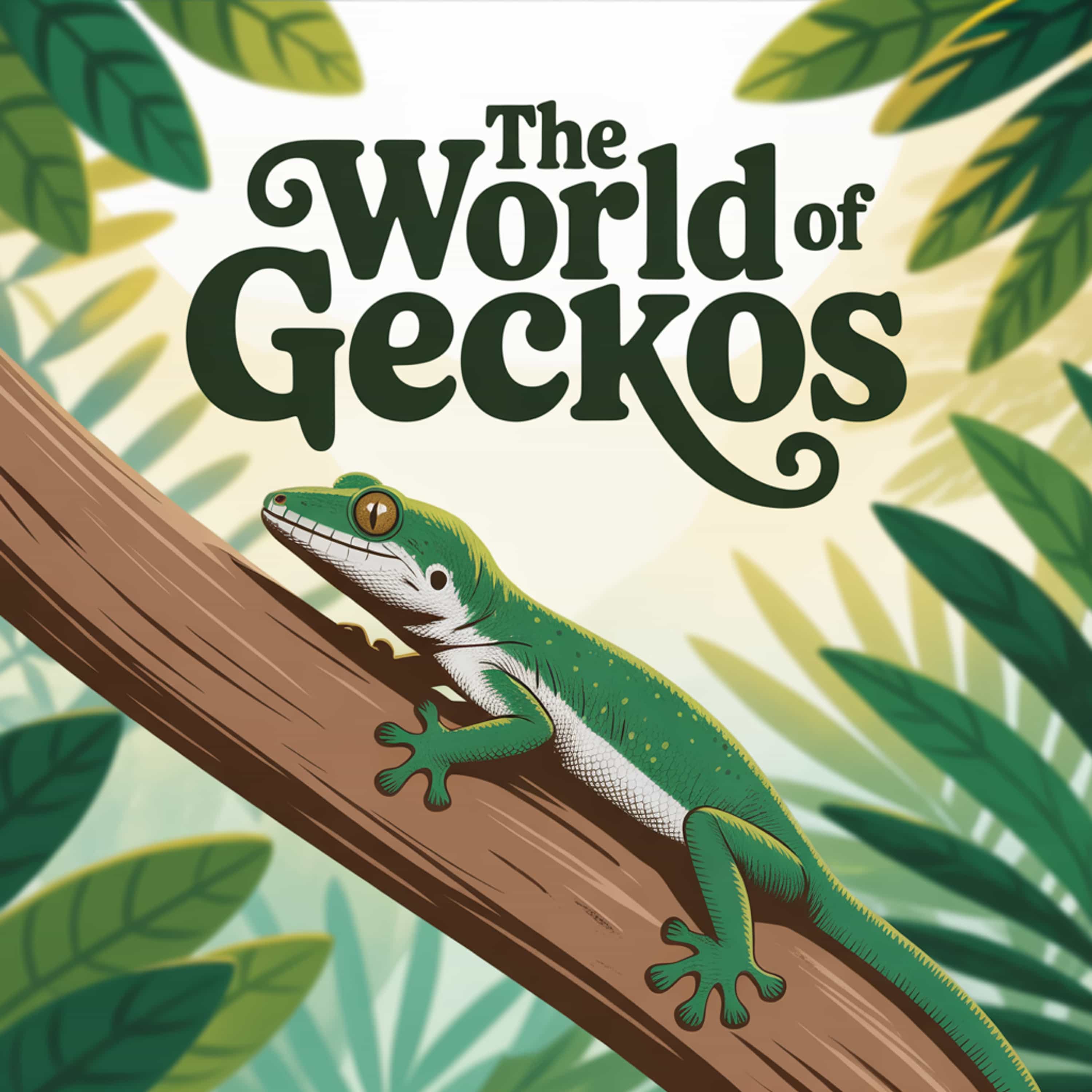
Chahoua Geckos Up Close
Explore the fascinating world of Chahoua Geckos, from their origins in the forests of New Caledonia to their popularity in the pet trade. Discover their unique traits, conservation status, and what it takes to care for these vibrant reptiles.
Chapter 1
Meet the Mossy Marvels
Jay Tacey
Alright, welcome back to The World of Geckos! I'm Jay Tacey, and as always, I'm joined by Charlotte Davies. Today, we're diving into a species that's, well, honestly one of the most visually striking geckos out there—the Chahoua gecko. Or, as some folks call it, the mossy New Caledonian gecko, or even Bavay's giant gecko. They've got a lot of names, don't they?
Charlotte Davies
They really do, Jay. And I think each name captures a little bit of their character. "Mossy" is spot on, because their coloration and patterning really does look like lichen or moss growing on a tree. They're native to the southern part of New Caledonia and some of the outlying islands, like Île des Pins. It's such a unique habitat—lush, humid forests, lots of vertical space, which suits their arboreal lifestyle perfectly.
Jay Tacey
Yeah, and that arboreal thing is key. These geckos are built for climbing. I mean, they've got these strong, fully prehensile tails—like, they can really grip with them. Not all geckos can do that. And, unlike some of their relatives, they don't drop their tails as easily, which is kind of a relief if you're a keeper, honestly.
Charlotte Davies
Absolutely. And their size is impressive too—adults can reach up to about 10 to 12 inches, so they're not exactly tiny. But it's the colors that always get me. In the wild, you see a lot of rusty reds, browns, greens, and greys. But in captivity, with selective breeding, you get these incredible high white lines, pinks, and even some almost orange hues. It's fascinating how much variety there is.
Jay Tacey
Oh, totally. Actually, I remember the first time I saw a high white line Chahoua at a reptile expo—this was, uh, probably a decade ago now. I was just wandering the aisles, and there it was, this gecko with these bold white markings running down its sides, almost glowing under the expo lights. I just stood there staring at it for, I don't know, way too long. That was the moment I got hooked on their patterns. It's wild how much they've changed in captivity compared to their wild cousins.
Charlotte Davies
I can imagine! And it's interesting, because in the wild, their coloration is all about camouflage—blending in with moss and bark. But in captivity, breeders have really leaned into those vibrant, standout traits. It's a bit like what we discussed in our episode on crested gecko morphs, isn't it? The way selective breeding can bring out traits you rarely see in nature.
Chapter 2
From Vulnerable Wilds to Living Rooms
Charlotte Davies
Speaking of the wild, it's important to mention that Chahoua geckos are actually listed as Vulnerable on the IUCN Red List. Their native range is quite limited—just those southern New Caledonian forests and a few islands. Habitat loss and, to some extent, collection for the pet trade have put pressure on their populations.
Jay Tacey
Yeah, and that's something we touched on before with crested geckos and African fat-tailed geckos—how wild populations can be at risk even as the species becomes more common in captivity. But with Chahouas, captive breeding has really shifted the story. These days, most of the geckos in the pet trade are captive bred, which is a huge win for conservation. Breeders like Troy's Geckos and Sublime Reptiles have played a big role in that, producing healthy, genetically diverse animals.
Charlotte Davies
That's right. I actually had the chance to film Chahoua geckos in New Caledonia a few years ago. Watching them in their natural environment—climbing, foraging, even guarding their eggs under loose bark—was just magical. There's a real difference between seeing them in the wild and in a terrarium. In the wild, their behaviors are so much more complex, and you get a sense of how important those forests are for their survival.
Jay Tacey
I bet. And, you know, it's kind of amazing that, thanks to responsible breeding, these geckos have gone from being rarely seen outside their native range to being, well, not exactly common, but definitely accessible to dedicated keepers. It's a bit like the crested gecko story—almost lost to science, then rediscovered, and now thriving in captivity. But we can't forget that their wild populations still need protection.
Charlotte Davies
Exactly. Captive breeding helps, but it doesn't replace the need for habitat conservation. And I think it's important for keepers to remember that—owning a Chahoua gecko is a privilege, and it comes with a responsibility to support conservation efforts where possible.
Chapter 3
Caring for a Chahoua: Traits, Trade, and Trends
Jay Tacey
So, let's talk about what it actually takes to care for a Chahoua gecko. First off, they're omnivores and frugivores—so in captivity, you want to offer a mix of fruit-based diets and insects. There are some great commercial diets out there now, but variety is still important. And, uh, humidity is key. These guys come from humid forests, so you want to keep things moist, but not swampy. Around 60 to 80 percent humidity is a good range.
Charlotte Davies
And don't forget about climbing space. They're arboreal, so vertical enclosures with lots of branches, cork bark, and foliage are essential. They really make use of every inch of space. And with good care, they can live 15 to 20 years, which is quite a commitment. So, it's not a pet to take on lightly.
Jay Tacey
Yeah, and in terms of the pet trade, there's a huge range of traits and prices out there. I mean, you can find Chahouas for a few hundred dollars, but some of the high-end morphs—like the "Super Red High White Incredible Pink Female" from Troy's Geckos—can go for close to two thousand dollars. It's wild. The demand for unique colors and patterns has really driven up the value, especially for those high white lines and rare pinks.
Charlotte Davies
It really has. And I think that leads to the big question: what makes a Chahoua gecko a good pet? For me, it's their personality—they're generally quite calm, and with regular handling, they can be quite interactive. But they're also sensitive to their environment, so you need to be attentive to their needs. Selective breeding has definitely changed their appearance, but I think it's also made them more accessible to people who want a visually stunning, but still manageable, gecko.
Jay Tacey
Yeah, I agree. They're not for absolute beginners, but for someone ready to put in the effort, they're incredibly rewarding. And, like you said, the selective breeding has brought out some amazing traits, but it's also important to keep an eye on health and genetic diversity. That's something the best breeders are really focused on these days.
Charlotte Davies
Absolutely. Well, I think that's a good place to wrap up for today. Chahoua geckos are truly one of the gems of the gecko world—beautiful, fascinating, and a real testament to the power of both nature and responsible breeding.
Jay Tacey
Couldn't have said it better myself, Charlotte. Thanks for joining us, everyone. We'll be back soon with more gecko stories and care tips. Take care!
Charlotte Davies
Thanks, Jay. And thanks to all our listeners—see you next time on The World of Geckos. Goodbye!